



Despite the headwinds in global trade triggered by protectionism and regional unrest, Shenzhen reclaimed the top spot among Chinese cities in total foreign trade volume in 2024, after a nine-year gap. In the first 11 months of 2025, the city's cumulative import and export value reached 4.12 trillion yuan (US$585 billion), solidifying its position as the national leader.
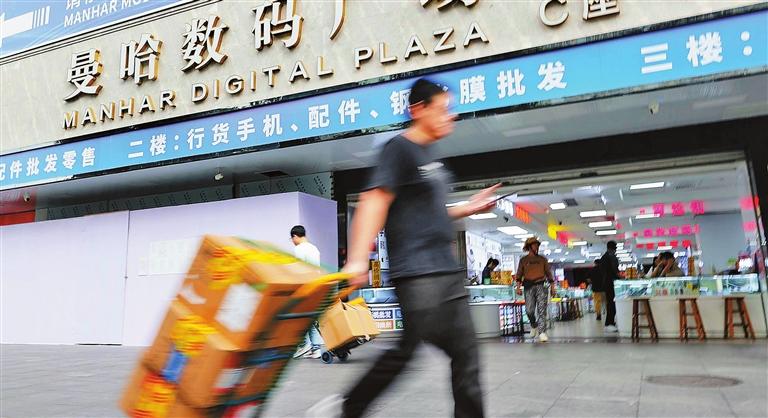
Huaqiangbei in Futian District is considered a barometer of the global electronics industry. Photos from Shenzhen Special Zone Daily unless otherwise stated
The city's dazzling performance in foreign trade is underpinned by its strength in advanced manufacturing and a high-tech innovation ecosystem. From consumer drones and smart robots to biomedicine equipment and 3D printers, Shenzhen's high-tech products are sought-after in the global market.
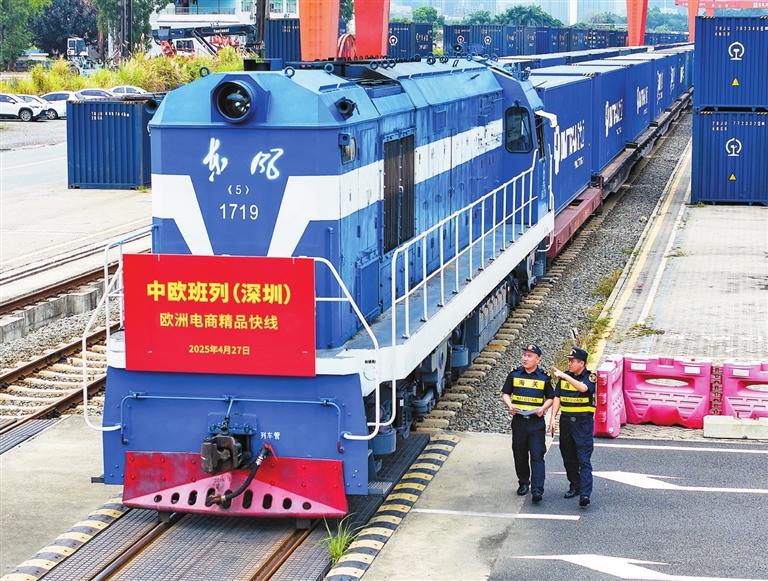
The first e-commerce freight train from the Guangdong-Hong Kong-Macao Greater Bay Area departs on the China-Europe Railway Express.
In the summer of 2025, hundreds lined up outside New York City's Grand Central Terminal at 3 a.m., scrambling for the latest digital product from Shenzhen-based Insta360. Leveraging the consumer electronics supply chain in Bao'an District, which comprises over 5,000 national high-tech enterprises, Insta360 can rapidly turn a concept into a product, mass-produce it, and deliver it to end consumers. This agility allows the company to seize market opportunities.
As a global powerhouse in IT and electronics, Shenzhen possesses a complete, closed-loop industrial chain from chip design to packaging, testing, and assembly, all the way to the end consumer product. The synergy arising from a high degree of industrial agglomeration anchors Shenzhen's expanding foreign trade.
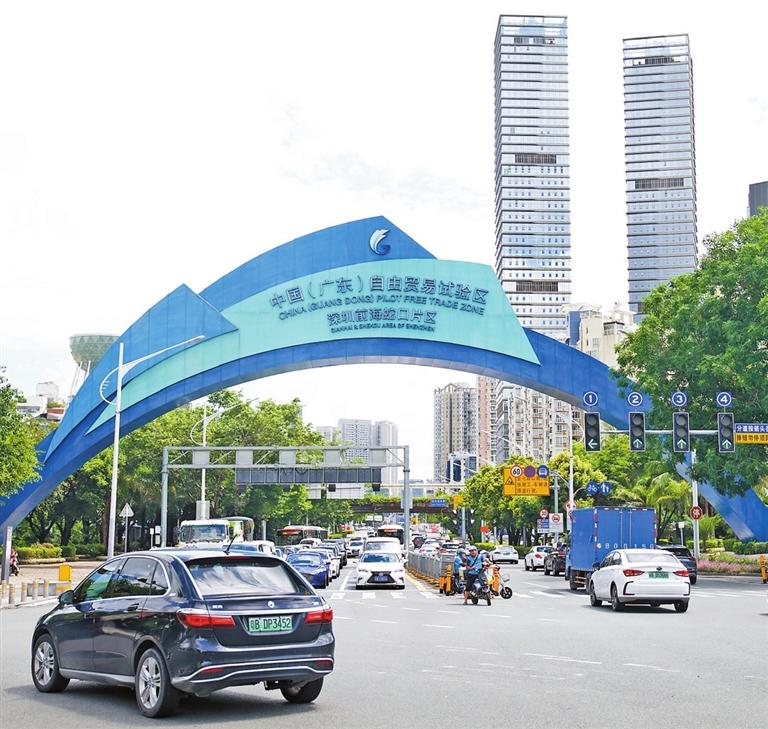
The Qianhai & Shekou Area of Shenzhen of China (Guangdong) Pilot Free Trade Zone. China News Service
Innovation drives the continuous upgrade of Shenzhen's foreign trade structure. The city is home to over 25,000 national high-tech enterprises and more than 1,000 national-level "little giants" — specialized and sophisticated SMEs that produce novel and unique products. The "new three" products — lithium batteries, new energy vehicles, and photovoltaic products — alongside drones and 3D printers, are new engines driving export growth.
Responding to changing global trade landscapes, Shenzhen has seized opportunities presented by thriving cross-border e-commerce to build efficient international logistics corridors, further cementing its position as a foreign trade hub.
Shenzhen has established 11 cross-border e-commerce supervision sites and bonded zones, ranking among the highest in China. This guarantees convenient and efficient customs clearance services for importers and exporters across the city, supporting its foreign trade growth.
The adoption of new business models like cross-border e-commerce, bonded maintenance, and overseas warehouses has opened up new opportunities for SMEs to participate in global value chains and helped Shenzhen's own brands enter emerging markets in Latin America, the Middle East, and Africa. Through these new channels, high-value-added products such as industrial robots, smart home appliances, and AI-powered devices are making inroads into new markets.
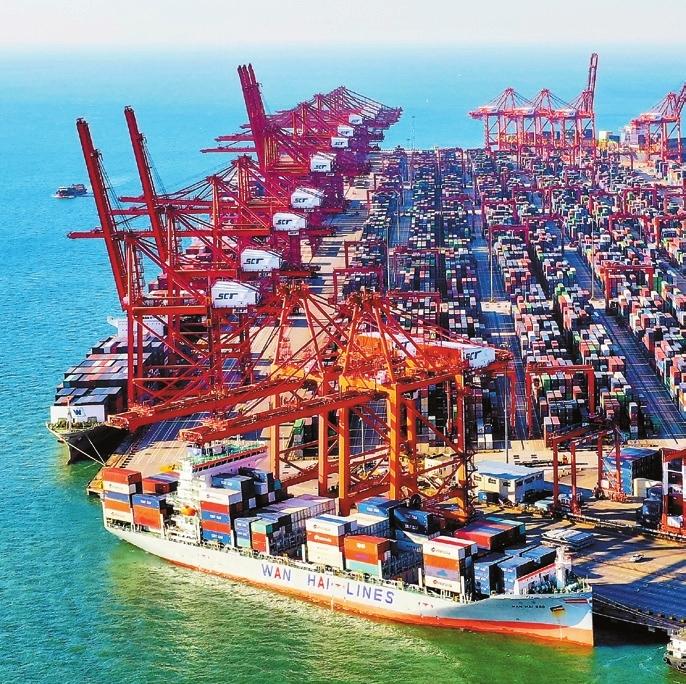
Yantian Port is one of the world's busiest seaports.
A robust logistics network is the lifeline of foreign trade. Shenzhen airport's international cargo routes connect 27 countries and regions, while its seaports operate 270 international container shipping routes. On land, the China-Europe Railway Express runs 27 export routes departing from Shenzhen. This vast logistics network ensures Shenzhen-made products can reach overseas markets swiftly.
Shenzhen's exporters have adapted to the restructuring global supply chain by diversifying their customer base and exploring emerging markets. Bao'an-based Maxevis Technology is one example.
"One of our kids' music walkie-talkies was a bestseller overseas, with the majority of our customers based in Europe and the United States," said Maxevis' marketing director Wu Xinhe. "Now we are also trying to sell to emerging markets like Indonesia and the UAE."
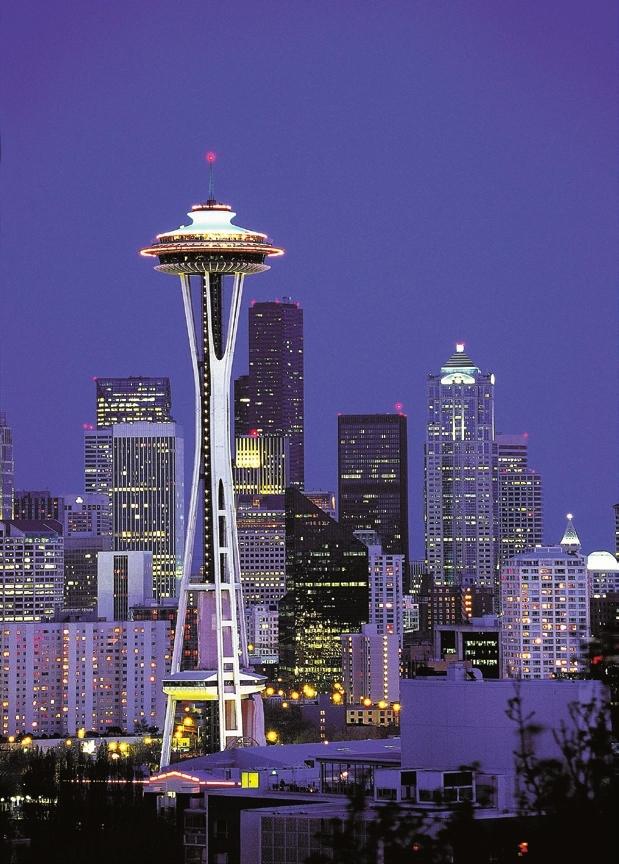
A view of Seattle featuring its iconic Space Needle.
In the first 11 months of 2025, general trade accounted for over half (53.5%) of Shenzhen’s total import and export value, while bonded logistics and processing trade also recorded stable growth.
Building on resilient supply chains and empowered by technological innovation, Shenzhen’s companies are actively expanding into new overseas markets. Looking ahead, the city is well-positioned to continue playing a leading role in driving the growth and structural upgrade of China's foreign trade.
Policy Spotlight
10 measures to bolster foreign trade
In April 2025, the Shenzhen Commerce Bureau introduced 10 measures to support companies engaged in foreign trade, helping them secure orders and expand into new markets.
These include:
● Supporting enterprises in expanding into overseas markets through both online and offline channels;
● Fully leveraging the role of export credit insurance;
● Encouraging the import of key commodities;
● Supporting cross-border e-commerce firms in brand building;
● Promoting compliance in cross-border e-commerce;
● Supporting logistics and warehousing services for cross-border e-commerce;
● Encouraging firms to undertake overseas construction projects;
● Supporting outbound investment and cooperation;
● Enhancing financial services for enterprises;
● Improving services and support mechanisms for enterprises.
APEC Snapshots
APEC through the years
First stop: Seattle, the U.S.
The first APEC Economic Leaders' Meeting was held in Seattle, the U.S., in 1993. The meeting pledged to strengthen cooperation within the Asia-Pacific community and to work toward stability, security and prosperity for its people.
Seattle is located on the Pacific coast in northwestern Washington State. Its iconic landmark is the Space Needle, a 185-meter-tall observation tower. As the home of Boeing and Microsoft, Seattle is renowned for its aerospace, information technology, bioengineering, timber processing, and fishery industries. It has been a sister city of Chongqing since 1983 and became Shenzhen's friendship city in 2015.