


Significant progress has been reported on several major infrastructure projects within the Guangdong-Hong Kong-Macao Greater Bay Area (GBA), promising to drastically reduce travel times and enhance connectivity between key cities.
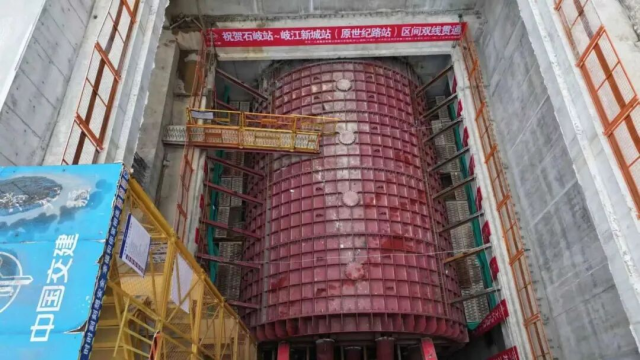
(Photo: Zhongshan Rail Transit Affairs Center)
The most notable update comes from the Nansha-Zhuhai (Zhongshan) Intercity Railway (the Zhongshan section), a crucial rail link currently under construction. Recently, the twin tunnels of the Shiqi Station to Qijiang New Town Station section were successfully completed, marking a double-line breakthrough for this segment. This follows the earlier breakthrough of the left tunnel in October 2025.
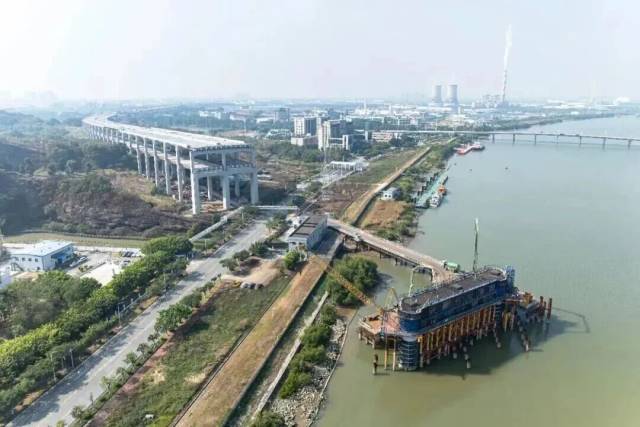
This section spans 47.6 kilometers within Zhongshan, featuring 9 stations (2 reserved) and is designed for speeds of 160 km/h. Upon completion, it is projected to reduce the travel time between Zhongshan's Qijiang New Town and Guangzhou's Pearl River New Town to just 45 minutes, significantly boosting commuter efficiency. The railway is also planned with future extensions toward Zhuhai and Shenzhen.
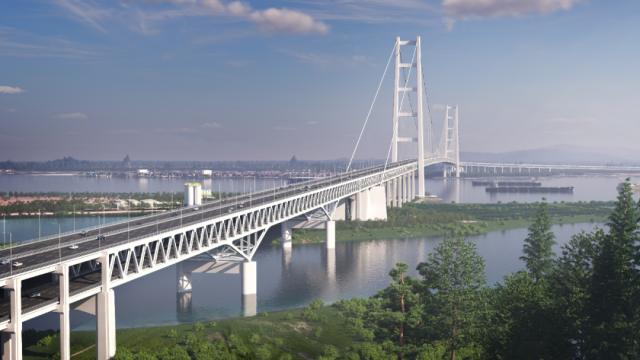
In parallel, the Lion Rock Channel project, set to be the Pearl River Estuary's first double-decker cross-river passage, has reached a key construction milestone. Workers have successfully poured the concrete for the project's largest cap beam on the Shazaili Waterway Bridge, accelerating the approach bridge construction phase. This 35-kilometer channel will link Guangzhou's Nansha District with Dongguan, featuring 16 lanes across two levels and a design speed of 100 km/h. It is expected to significantly shorten travel time between Nansha and Dongguan upon its opening.
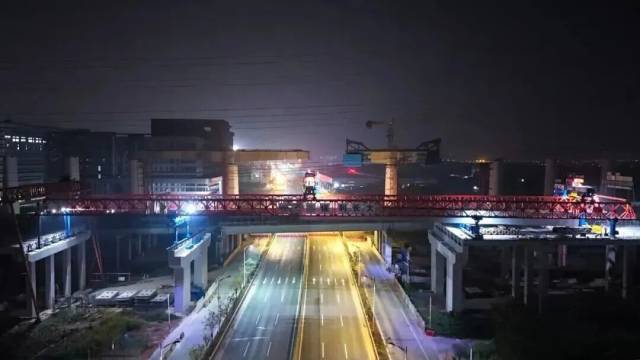
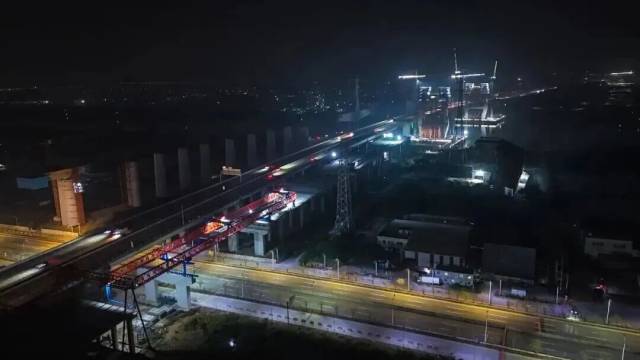
Furthermore, the Guangzhou-Zhuhai Section Expansion Project has made progress with the successful installation of the first 58-meter steel-concrete composite girder on the southern approach bridge of the Hailong Bridge over the Xiaolan Waterway. Each girder weighs approximately 130 tons. This expansion project will upgrade the Guang'ao Expressway section between Nansha and Zhuhai to 10 lanes from the current 6, making it the first highway of its scale in the GBA.
These advancements underscore the accelerated pace of infrastructure development in the GBA, aiming to create a more integrated and efficient regional transportation network.
Author | Jiang Chang
Photo | Wenming Nansha
Editor | Wei Shen, James Campion, Shen He


