



Daggers and bracelets set with rubies, emeralds, and diamonds. Luminous rock crystal, intricately carved jade, and a gold coin as large as a plate. These are among the dazzling objects on display in "Blossoms and Blades: Treasures of the Mughal Court in 16-19 Centuries" at Shenzhen Museum's history and folk culture division.
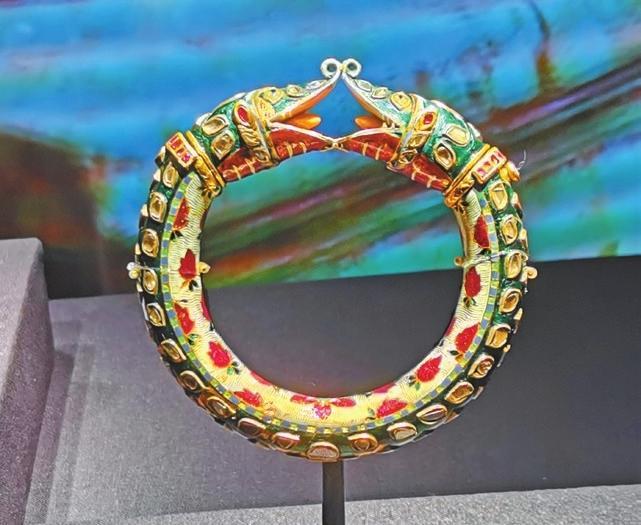
A 17th-century gold and enamel bracelet set with diamonds and rubies.
The Mughal dynasty, one of the world's most influential dynasties from the 16th to the 19th centuries, ushered in a golden age of cultural and artistic achievement in South Asia.
Positioned at the crossroads of the ancient Silk Road, the empire fostered exchanges between East and West. A rich fusion of Islamic and local Indian traditions produced extraordinary works across architecture, jewelry, textiles, miniature painting, and other arts — treasures celebrated in South Asia and around the world.
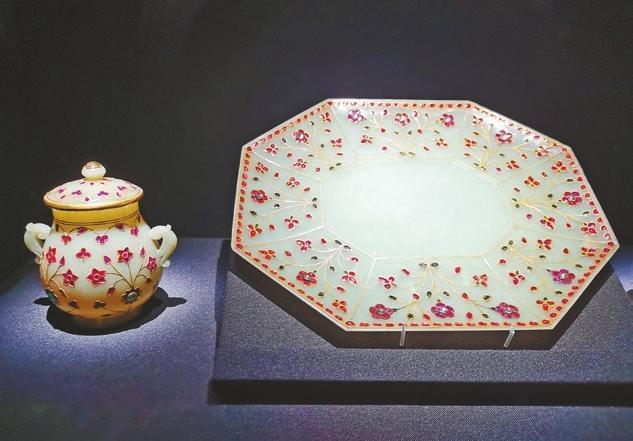
Jade items inlaid with gemstones.
Mughal court art flourished, characterized by its diversity and inclusivity. Fueled by emperors passionate about the arts, the court absorbed influences from South Asia, China, Iran, Europe and beyond, producing a distinctive style that has left a lasting legacy.
With support from Art Exhibitions China and the al-Sabah Collection/Dar al-Athar al-Islamiyyah, Kuwait, the exhibition presents nearly 200 exceptional Mughal artifacts, all of which are being shown on the Chinese mainland for the first time.
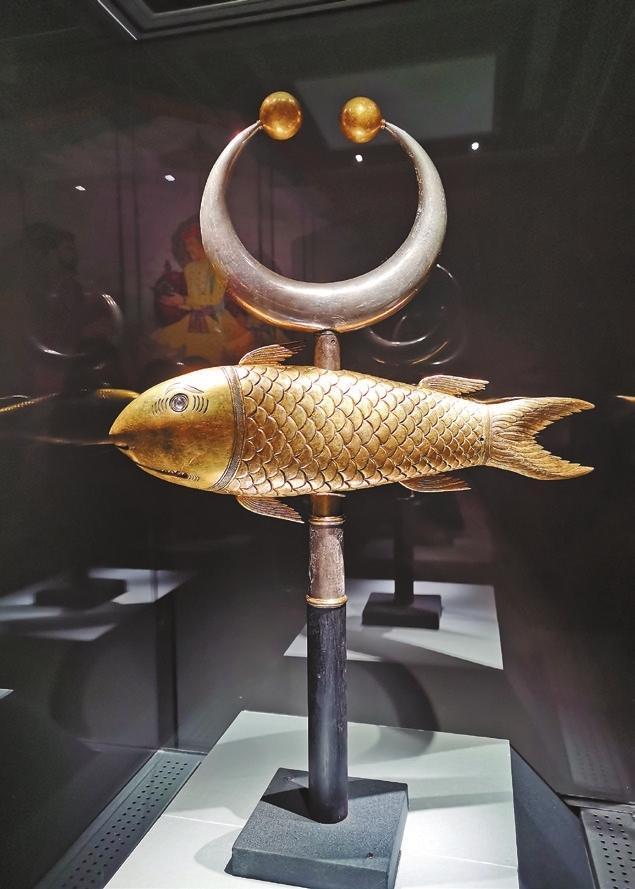
A 17th-century scepter head.
The exhibition explores Mughal history, court life, and artistic practice: from weapons and ceremonial objects that signified power and ritual, to intricate miniature paintings that depict daily and courtly life, and carpets that reflect exotic aesthetics. These pieces not only reveal exceptional craftsmanship and artistic vision but also testify to the blending of diverse civilizations.

A 17th-century gold necklace set with gemstones. Photos by Cao Zhen
The exhibition walls are decorated with enlarged reproductions of Mughal miniature paintings; their vibrant scenes help create an immersive atmosphere evocative of the opulent Mughal court.
Visitors can also buy souvenirs at the museum shop, such as chocolates and nuts, tea and drip coffee, necklaces, earrings, and rings, refrigerator magnets, bookmarks, toys, and more.
Dates: Through April 6
Venue: Shenzhen Museum's history and folk culture division, Jintian Road, Futian District (深圳博物馆金田路馆—历史民俗)
Metro: Line 2 or 4 to Civic Center Station (市民中心站), Exit B