


Guangdong Province experienced one of its most eventful and extreme climate years on record in 2025, marked by unprecedented typhoon activity, exceptional rainfall extremes, rare severe weather events, and continued improvements in air quality.
A Record Year for Typhoons
In 2025, 15 tropical cyclones made landfall in or affected Guangdong—the highest number on record, tying with 1961. Seven typhoons made direct landfall, while 10 caused severe impacts, far exceeding the long-term average. Typhoons Ragasa and Matmo inflicted particularly heavy damage on western Guangdong, bringing destructive winds and extreme rainfall.

Tropical cyclones making landfall in or severely affecting Guangdong (1949–2025)
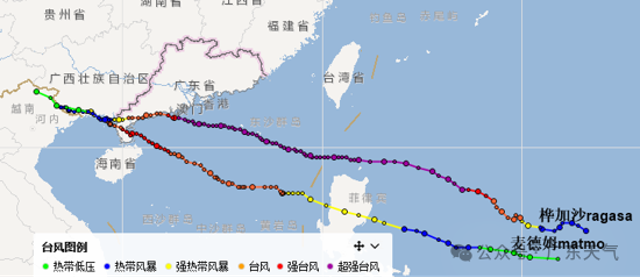
Tracks of Typhoons Ragasa and Matmo
Cleaner Air Than Ever Before
Despite frequent storms, air quality reached a historic high. The province recorded an average of 12.1 haze days, the lowest since records began in 1980. PM2.5 levels averaged 21 μg/m³, remaining below the World Health Organization's interim guideline for the sixth consecutive year.

Annual change in average haze days in Guangdong (1980–2025, as of December 30, 2025)
Exceptional Rainfall and Flooding
The 2025 flood season saw the highest number of extreme rainstorm days in a decade, with precipitation 21% above normal. Persistent heavy rains triggered a once-in-a-century flood in Huaiji County, Zhaoqing City, while parts of western Guangdong recorded rainfall exceeding 900 mm in a single event.

Huaiji hit by a once-in-a-century flood

Extreme rainstorms during Guangdong's 2025 flood season
Rare and Extreme Weather Events
China's first recorded tornado outbreak cluster occurred in Zhanjiang, with 20 tornadoes over two days—an unprecedented event in South China.
Around 8:30 a.m. on September 29, a moderate-intensity (EF1) tornado struck Mazhang Town, affecting areas including Zhanjiang North Railway Station, Zhanjiang Avenue, Xiting Village, and Baishuipo.
Rare dust storms affected much of Guangdong in April, marking the most significant such episode in 15 years.

Dust storms hit Guangdong on April 12–13, 2025 (Image courtesy of Weibo users)
August temperatures fell to the lowest level this century for the same period, while September and October became the hottest on record, underscoring sharp seasonal contrasts.
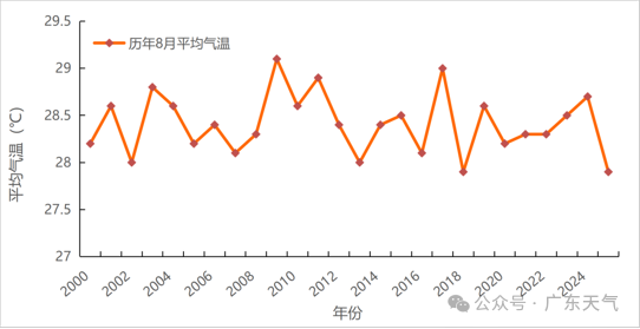
Average August temperature in Guangdong (2000–2025, °C)

Average September–October temperature in Guangdong Province (1951–2025, °C)
Rising Climate Risks
A prolonged dry spell in late autumn and winter pushed forest fire danger to critical levels, with widespread red alerts issued across the province and some eastern cities under the highest warning for over a month.

Guangdong Forest Fire Risk Warning Map – November 27, 2025
Outlook
The climate patterns of 2025 highlight Guangdong's growing exposure to climate variability and extreme weather, while also demonstrating progress in environmental governance, particularly in air quality improvement. Authorities emphasize the need for stronger disaster preparedness, climate resilience, and sustainable development in the years ahead.
Author | Huang Xinying, Liu Lingzhi
Photo | Guangdong Weather
Editor | Wei Shen, James Campion, Shen He


