


On February 14, as the Spring Festival approaches, the world's first outdoor Mazu‑themed Mixed Reality (MR) night tour theater debuted at the Fengshan Folk Culture Tourism Area in Shanwei, south China's Guangdong Province.
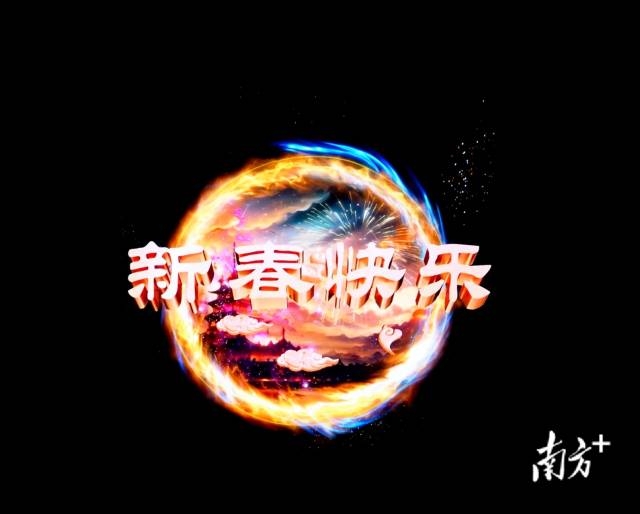
That evening, the event kicked off with spectacular naked‑eye 3D visuals and light shows, illuminating the night sky with modern technology. It was followed by a succession of intangible cultural heritage performances, including dragon dances, Qilin dances, lion dances, a folk performance featuring a fabric horse prop, drum dances, and fishermen's songs.
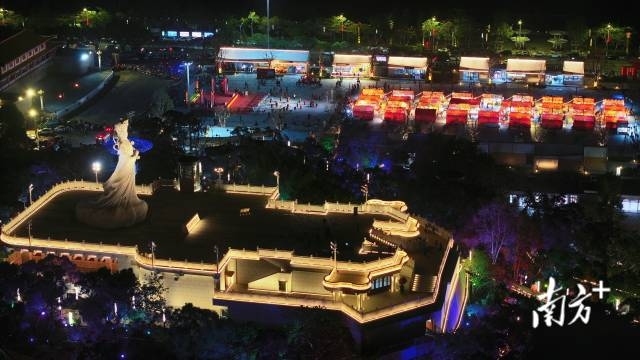

After its renovation and upgrade, the Fengshan Folk Culture Tourism Area introduced the first outdoor Mazu-themed MR show worldwide. The content of the MR night tour experience, reviewed and approved by cultural experts and intangible cultural heritage inheritors, deeply integrates the traditional belief in Mazu with cutting-edge MR technology and local intangible cultural heritage. By overlaying virtual elements onto the real world, MR technology makes Mazu culture perceptible, tangible, and interactive, aligning closely with the cultural consumption habits of contemporary people, especially the younger generation.
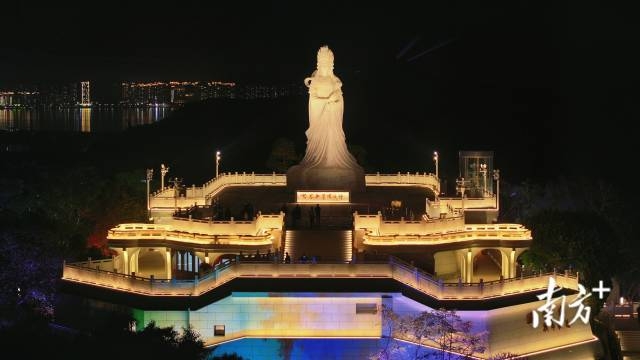
Wearing a head‑mounted MR display, the reporter experienced scenes blending virtual and real elements in front of the 16.83‑meter‑high Mazu stone statue. Local intangible cultural heritage elements like Shanwei fishermen's songs and the Ground-Rolling Golden Dragon dance were well integrated, allowing for an immersive viewing of the complete journey of Mazu from a young girl to the Goddess of the Sea.
Furthermore, the reporter used the device's virtual interaction technology to grab a wisdom pouch, achieving an immersive and interactive experience. Throughout the approximately 10-minute program, the experience felt like stepping into a world that was both tangible and fantastical.
Additionally, the scenic area is open for free during the day, fully retaining its daily functions for praying, sea‑viewing, and leisure. At night, it transforms into a paid MR night tour theater, complete with light shows and other performances, positioning itself as a new nighttime landmark of cultural tourism in eastern Guangdong.
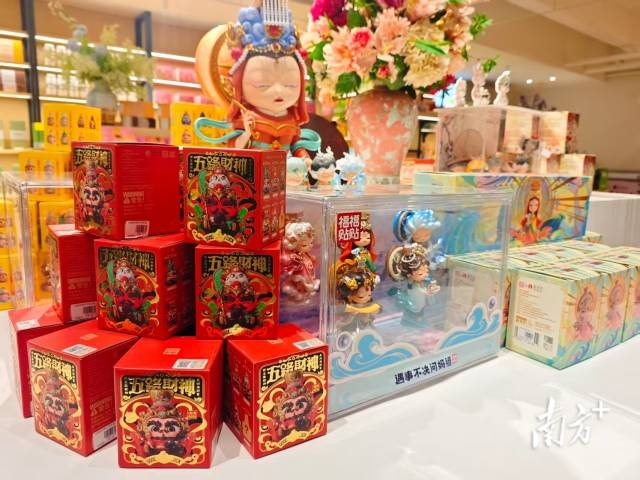
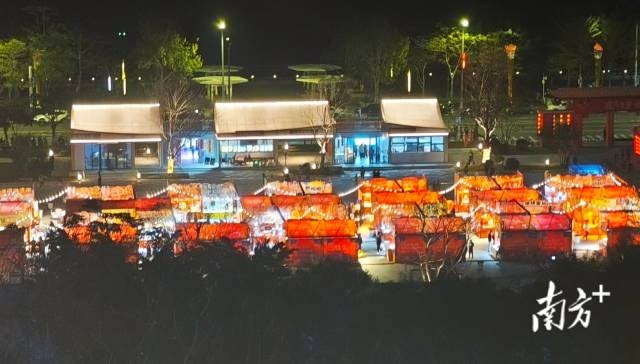
The scenic area has also added several new commercial facilities. While enhancing its functions of tourism service, these additions offer visitors more opportunities to taste the local delicacies in Shanwei and experience its vibrant everyday life.
To allow residents and tourists to fully immerse themselves in the festive atmosphere and cultural charm of the Spring Festival, the scenic area has meticulously prepared a series of activities. From February 15 to March 3, from 10:00 a.m. to 10:30 p.m. daily, there will be a carnival for foodies catering to both families and young visitors. From 10:00 a.m. to 10:00 p.m. daily, a performance gala will feature a series of stage shows, including the intangible cultural heritage of dazzling molten iron fireworks, the flyboard show, the dragon and lion dances for the New Year, and the Yingge dance, among other highlights.
Shanwei, which borders the South China Sea, has historically been a place where fishermen and merchants ventured out to sea for their livelihoods. Out of reverence for the unknown ocean, residents in ancient times regarded Mazu as their spiritual anchor, praying for safety and mutual aid. The Fengshan Mazu Temple is located at the critical junction where Pinqing Lake, the largest coastal lagoon in the Chinese mainland, meets the outer sea.

Author | Zhang Xuanzhen (intern), Liu Lingzhi
Photo | Nanfang Plus


