


Guangzhou First People's Hospital Nansha Hospital ("Nansha Hospital") recently celebrated a new milestone: its 10th and 11th transfusion-dependent β-thalassemia patients were successfully cured from the sterile ward.
Since June of this year, Nansha Hospital has performed stem cell transplantations on 13 thalassemia patients. Six patients have already been discharged, achieving "a one-time treatment for lifelong cure," and seven patients will be discharged soon.

"After waiting all these years, my child will no longer need blood transfusions," shared the father of one patient who will be discharged soon. His child was diagnosed with β-thalassemia 13 years ago and required transfusions twice a month. "Finding blood sources, coordinating hospitals, and managing iron overload—it was an endless struggle," he added.
Thalassemia, a genetic hemolytic disorder, forces some patients into lifelong blood transfusions. However, chronic transfusions may cause iron overload, leading to life-threatening complications like liver damage.
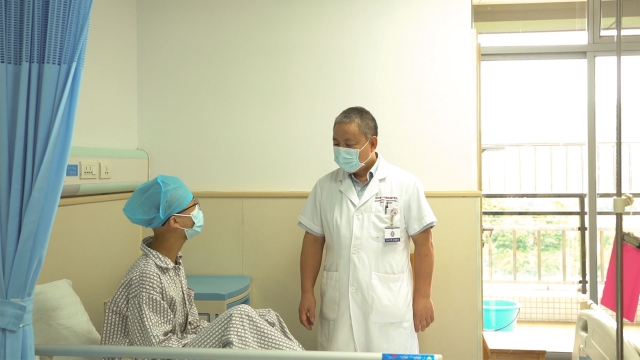
Cell and gene therapy now offers an alternative. Dr. Zhang Yuping, Director of the Hematology Department at Nansha Hospital, explains that this therapy effectively provides healthy autologous hematopoietic stem cells for blood production. Since the cells have no rejection risk, they allow patients to return to normal life.
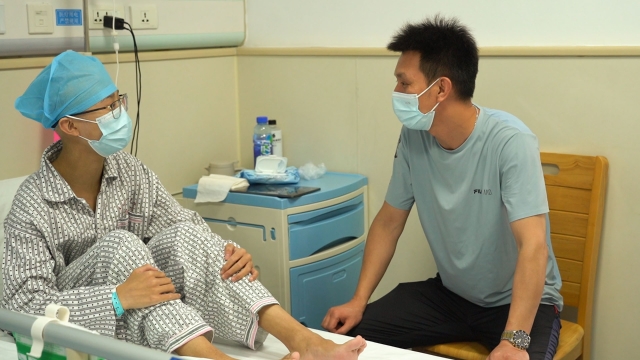
"I endured tough days in the ward, but now I'm excited! When I grow taller, I will go to the gym and play basketball!" exclaimed 16-year-old Xiao Yi (pseudonym) from Chongqing.
In 2023, China began supporting Guangzhou Nansha's pilot reforms in medical market access. The policy permits pre-approved cell and gene therapy firms to conduct clinical applications through hospitals. As a key implementer, Nansha Hospital has collaborated with industry leaders to create an integrated R&D-to-clinic platform to accelerate adoption. Nansha Hospital is now expanding to treat liver failure and knee joint degeneration, promising a wider impact.
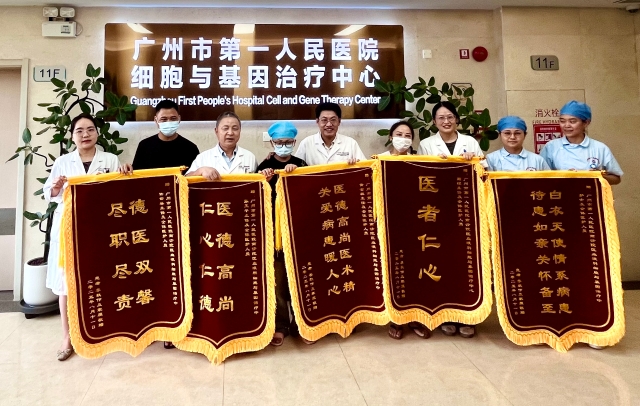
Dr. Zhang revealed that after these successes, Nansha Hospital will refine protocols and complication management. Future plans include extending treatment to patients over 30 years old, with milder iron overload, infectious diseases, and even failure of allogeneic hematopoietic stem cell transplantation. The hospital also plans to expand services to Hong Kong and Southeast Asia.
Now, Nansha is poised to become a hub serving the Guangdong-Hong Kong-Macao Greater Bay Area and offering renewed hope for patients battling complex diseases. Like Xiao Yi's dream of sports and growth, countless futures once constrained by thalassemia are now restarting in Nansha.
Author: Zhang Yiwei, Liang Shiting
Photo: Cheng Yumu
Editor: Wei Shen, James Campion, Shen He


